Duchy of
Saxe-Coburg und Gotha
Herzogtum Sachsen-Coburg und Gotha
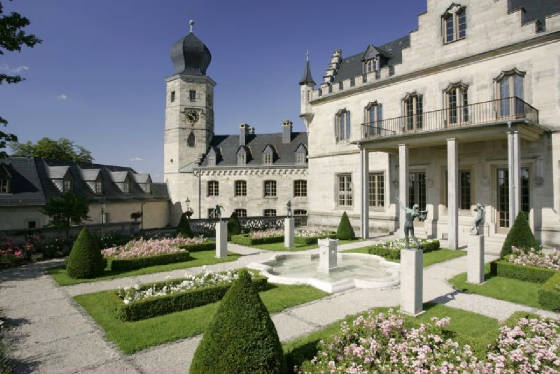
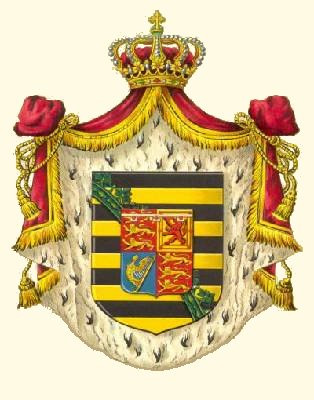
Saxe-Coburg and Gotha or Saxe-Coburg-Gotha (German: Herzogtum
Sachsen-Coburg
und Gotha) served as the collective name of two duchies,
Saxe-Coburg and Saxe-Gotha, in Germany. They were located
in what today
are the states of Bavaria and Thuringia, respectively, and the two were in
personal union between 1826 and 1918. The Duchy
came to an end in 1918
with the other German monarchies, and the Free State of Saxe-Coburg-Gotha
was established. This was
merged into the new state of Thuringia two years later.
The name Saxe-Coburg-Gotha also may refer to the family of
the ruling House
of Saxe-Coburg and Gotha, which played many varied roles in nineteenth and
twentieth-century European
dynastic and political history, branches of
which currently reign in Belgium and the Commonwealth realms.
The History of the Duchy
The
two duchies, Saxe-Coburg and Saxe-Gotha, were among the Saxon
duchies held by the Ernestine
branch of the Wettin dynasty. The duchy
of Saxe-Coburg and Gotha originated as the
personal union of these two
duchies in 1826, after the death of the last Duke of Saxe-Gotha-Altenburg,
who
died without male heirs. His Wettin relations repartitioned his lands.
The former husband of Louise of Saxe-Gotha-Altenburg,
the only niece of
the last duke, was Duke Ernest III of Saxe-Coburg-Saalfeld. He received
Gotha and changed his name and title to Ernest I, Duke of Saxe-Coburg and
Gotha
although, technically, the two duchies remained as separate duchies.
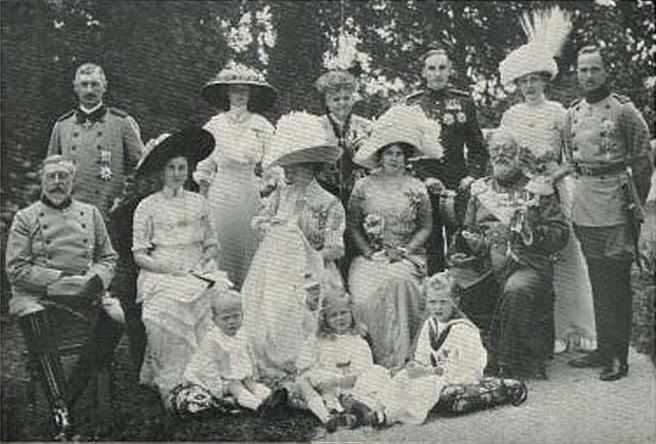
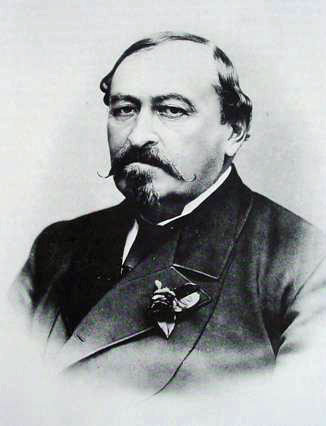
Ernst I died
in 1844. His elder son and successor, Ernest II, ruled until his own death in 1893. As he died childless, the throne of the
duchies would have passed to the male descendants of Ernst's late brother Albert, the Prince Consort, husband of Queen Victoria
of the United Kingdom. However, the constitutions of both duchies excluded the British heir apparent from the ducal thrones
if there were other eligible male heirs, although Albert Edward, Prince of Wales had already renounced his claim to the ducal
throne in favour of his next brother, Prince Alfred, Duke of Edinburgh.
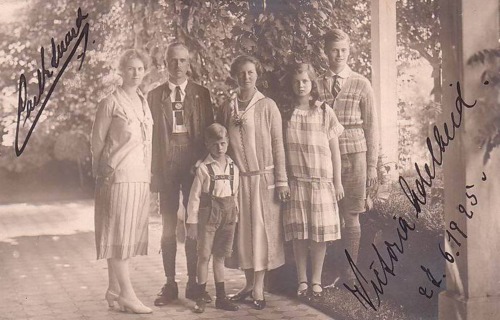
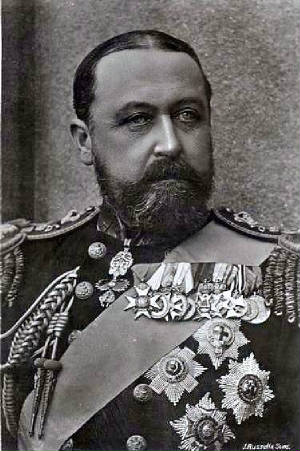
Alfred's only
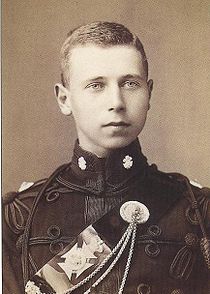
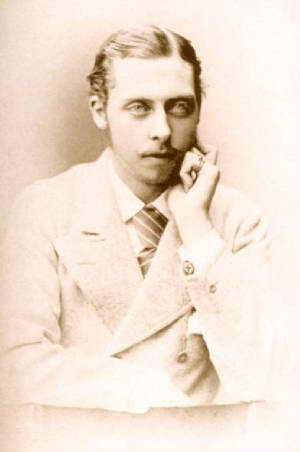
son, also named Alfred, committed suicide in 1899, so when Duke Alfred died in 1900, he was succeeded by his nephew the Duke
of Albany, the sixteen-year-old son of Queen Victoria's youngest son, Leopold. Alfred's next brother Prince Arthur, Duke of
Connaught and his son Prince Arthur of Connaught having renounced the succession. Reigning as Duke Carl Eduard, or Charles
Edward, under the regency of the Hereditary Prince of Hohenlohe-Langenburg until he came of age in 1905, the new duke also
continued to use his British title, Duke of Albany.
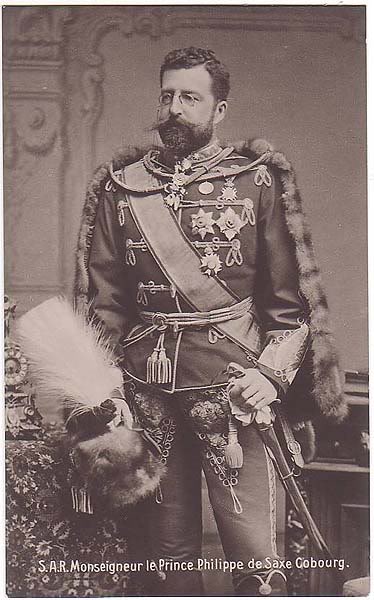
As a result
of Charles Edward fighting for Germany against the British in the First World War, he was stripped of his British titles in
1919. Charles Edward reigned until November 18, 1918 during the German Revolution, when the Workers' and Soldiers' Council
of Gotha deposed him. The two Duchies, now without a common ruler, became separate states until shortly thereafter, when they
ceased to exist. Saxe-Coburg became a part of Bavaria and Saxe-Gotha merged with other small states in 1920 to form the new
state of Thuringia in the Weimar Republic.
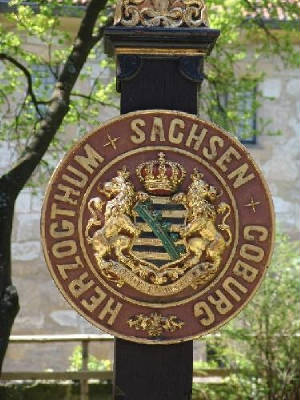
Duchy of
Saxe-Coburg and Gotha
The
capitals of Saxe-Coburg and Gotha were Coburg and Gotha. By 1914 the area and populations of the two duchies were:
Duchy Area Population
km² sq mi
Saxe-Coburg 562 217 74,818
Saxe-Gotha 1,415 546 182,359
Total 1,977 763 257,177
Saxe-Coburg-Gotha was the only European country to appoint
a diplomatic consul to the Confederate States of America during the American Civil War. This consul, Ernst Raven, was assigned
to a position in the state of Texas. Raven applied to the Confederate Government for a diplomatic exequatur on July 30, 1861
and was accepted.

Titles of The Duke of Saxe Coburg and Gotha
According to the House law of the Duchy of Saxe-Coburg
and Gotha the full Title and Style of the Duke was as follows: Wir,
Ernst, Herzog zu Sachsen-Coburg und Gotha, Jülich, Cleve und Berg, auch Engern und Westphalen, Landgraf in Thüringen,
Markgraf zu Meißen, gefürsteter Graf zu Henneberg, Graf zu der Mark und Ravensberg, Herr zu Ravenstein und
Tonna usw. Translation: We, Ernst, Duke of Saxe-Coburg and Gotha,
Jülich, Cleves and Berg, also Angria and Westphalia, Landgrave in Thuringia, Margrave of Meissen, Princely Count of Henneberg,
Count of the Mark and Ravensberg, Lord of Ravenstein and Tonna, etc.
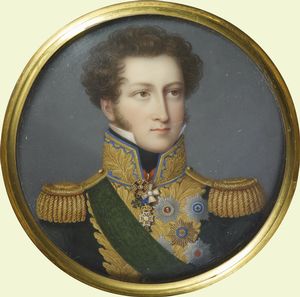
The Full
Titles of the Duke
Duke of Saxe-Coburg und Gotha, Duke of Jülich, Duke of Kleve, Duke of Berg, Duke of Engern,
Duke of Westphalia, Duke of Saxony, Margrave of Meissen, Landgrave of Thuringia, Prince of Lichtenberg, Princely Count of
Henneberg, Palatine of Saxony, Palatine of Thuringia, Count of Römhild, Count of Landsberg, Count of Brehna, Count of
Orlamünde, Count of Altenburg, Count of Eisenberg, Count of Mark, Count of Ravensberg, Lord Pleissen, Lord of Ravenstein,
Lord of Tonna.
The History
of the House of Wettin
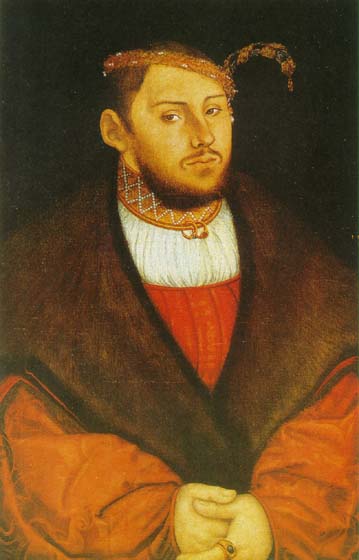
The House of Wettin is a dynasty of German counts, dukes, prince-electors (Kurfürsten) and kings that once
ruled the area of today's German states of Saxony, the Saxon part of Saxony-Anhalt, and Thuringia for more than 800 years
as well as holding at times the kingship of Poland. Agnates of the House of Wettin have, at various times, ascended the thrones
of Great Britain, Portugal, Bulgaria, Poland, Saxony, and Belgium; of these, only the British and Belgian lines retain their
thrones today. The oldest member of the House of Wettin who is known for certain was Thiedericus (died 982), who was probably
based in the Liesgau (located at the western edge of the Harz). Around 1000, as part of the German conquest of Slavic territory,
the family acquired Wettin Castle, after which they named themselves.

Wettin Castle is located in Wettin in the Hosgau on the Saale
River. Around 1030, the Wettin family received the Eastern March as a fief. The prominence of the Wettin family in the Slavic
marches caused Emperor Henry IV to invest them with the March of Meissen as a fief in 1089. The family advanced over the course
of the Middle Ages: in 1263 they inherited the landgraviate of Thuringia (though without Hesse), and in 1423 they were invested
with the Duchy of Saxony, centred at Wittenberg,thus becoming one of the prince-electors of the Holy Roman Empire.
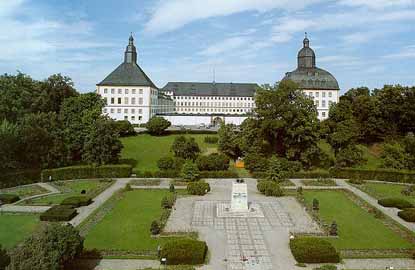
The family divided into two ruling branches in 1485 when the
sons of Frederick II, Elector of Saxony divided the territories hitherto ruled jointly. The elder son Ernest, who had succeeded
his father as Prince-elector, received the territories assigned to the Elector (Electoral Saxony) and Thuringia, while his
younger brother Albert obtained the March of Meissen, which he ruled from Dresden. As Albert ruled under the title of "Duke
of Saxony", his possessions were also known as Ducal Saxony.
The older,
Ernestine branch remained predominant until 1547 and played an important role in the beginnings of the Protestant Reformation.
Their predominance ended in the Schmalkaldic War, which pitted the Protestant Schmalkaldic League against Emperor Charles
V. Although itself Protestant, the Albertine branch rallied to the Empire's cause; Charles V rewarded them by forcing the
Ernestines to sign away their rights to the Electoral title and lands to the Albertines.
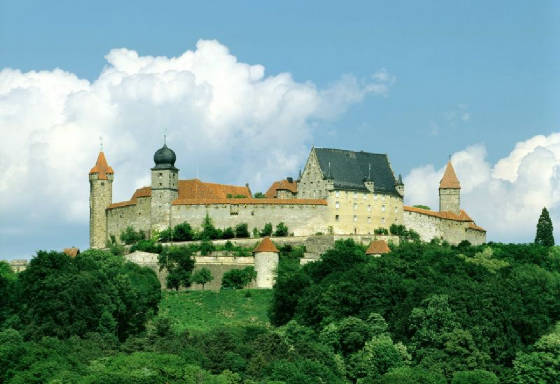
The Ernestine
line was thereafter restricted to Thuringia, and its dynastic unity swiftly crumbled. The Albertine Wettin maintained most
of the territorial integrity of Saxony, preserving it as a significant power in the region, and using small appanage fiefs
for their cadet branches, few of which survived for significant lengths of time. The Ernestine Wettin, on the other hand,
repeatedly subdivided their territory, creating an intricate patchwork of small duchies and counties in Thuringia.
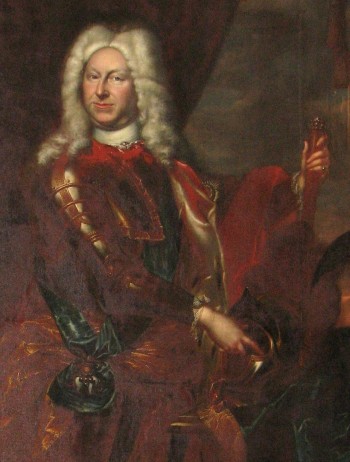
The junior
Albertine branch ruled as Electors (1547-1806) and Kings of Saxony (1806-1918) and also played a role in Polish history: two
Wettin were Kings of Poland (between 1697-1763) and a third ruled the Duchy of Warsaw (1807-1814) as a satellite of Napoleon.
After the Napoleonic Wars, the Albertine branch lost about 40% of its lands, including the old Electoral Saxony, to Prussia,
restricting it to a territory coextensive with the modern Saxony.
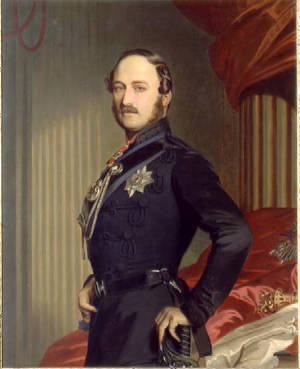
H.R.H.
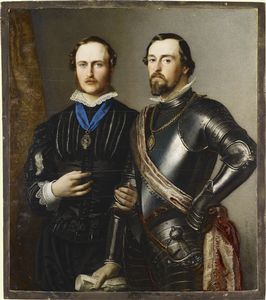
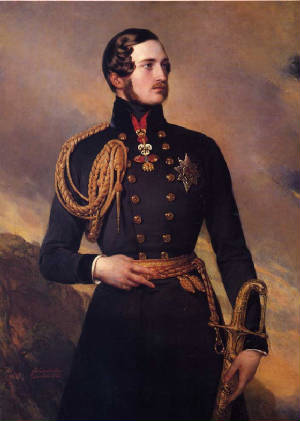
Prince Albert - Prince Consort of Great Britain
Prince Albert of Saxe-Coburg and Gotha (Francis Albert Augustus
Charles Emmanuel; later The Prince Consort; 26 August 1819 - 14 December 1861) was the husband of Queen Victoria of Great
Britain and Ireland. He was born in the Saxon duchy of Saxe-Coburg-Saalfeld.
At the age of 20 he married his first cousin, Queen Victoria, with whom he would ultimately have nine children. At first,
Albert felt constrained by his position as consort, which did not confer any power or duties upon him. Over time he adopted
many public causes, such as educational reform and a worldwide abolition of slavery, and took on the responsibilities of running
the Queen's household, estates and office.
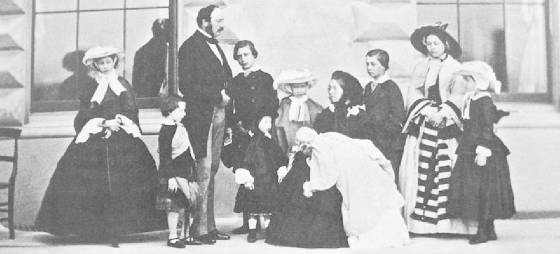
He was
heavily involved with the organisation of the Great Exhibition of 1851. Albert aided in the development of Britain's constitutional
monarchy by persuading his wife to show less partisanship in her dealings with Parliament-although he actively disagreed with
the interventionist foreign policy pursued during Lord Palmerston's tenure as Foreign Secretary. He died at the early age of 42, plunging the Queen into a deep mourning that lasted for the rest
of her life. Upon Queen Victoria's death in 1901, their eldest son, Edward VII, succeeded as the first British monarch of
the House of Wettin (Saxe-Coburg and Gotha), named after the ducal house to which Albert belonged.
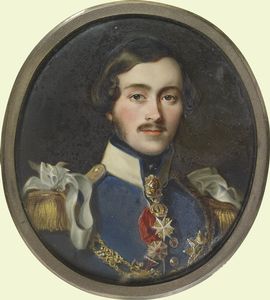
Dukes of Saxe-Coburg
and Gotha - 1826-1918
- Ernst
I 1826-1844
- Ernst
II 1844-1893
- Alfred 1893-1900
- Carl Eduard 1900-1918
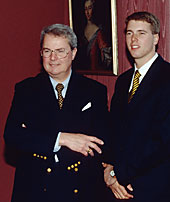
Heads of the House
since - 1918
- Carl Eduard 1918-1954
- Prince Friedrich Josias 1954-1998
- Prince Andreas 1998-present
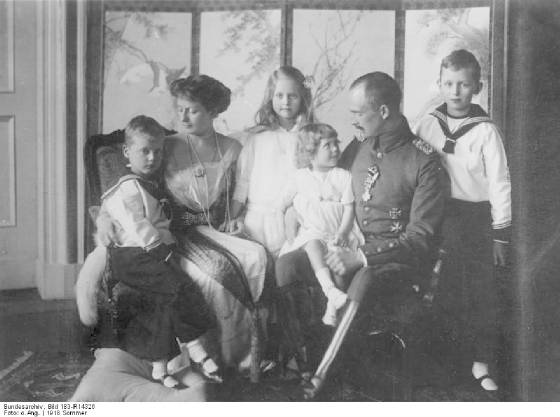
The Family
Titles and Styles
The members of this family
bear the titles Prince or Princess of Saxe-Coburg-Gotha,
Duke or Duchess of Saxony together with the formal appellation
of His or Her Highness.
The Genealogy of the Ducal House
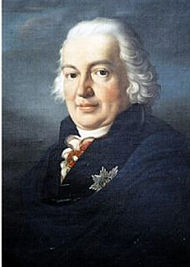
FRANZ Friedrich Anton, Duke of Saxe-Coburg-Saalfeld 8 Sep 1800 (Coburg
15 Jul 1750-Coburg 9 Dec 1806); m.1st Hildburghausen 6 Mar 1776 Sophie Pss of Saxe-Hildburghausen (Hildburghausen
22 Feb 1760-Coburg 28 Oct
1776); m.2d Ebersdorf 13 Jun 1777 Auguste Gfn Reuss zu Ebersdorf
(Ebersdorf 9 Jan 1757-Coburg 16 Nov 1831)
1a) Sophie Friederike Karoline Luise (Coburg
19 Aug 1778-Tuschmitz, Bohemia 8/9 Jul 1835); m.
Coburg 23 Feb 1804 Emanuel Gf von Mensdorff-Pouilly (Nancy 24 Jan 1777-Vienna
28 Jun 1852)
2a) Antoinette Ernestine Amalie (Coburg 28 Aug 1779-St.Petersburg
14 Mar 1824); m.Coburg
17 Nov 1798 Alexander, Duke of Württemberg (Mömpelgard 24 Apr 1771-Gotha 4 Jul 1833)
3a) Juliane Henriette Ulrike, took the name Anna Feodorovna
(Coburg 23 Sep 1781-Elfenau
15 Aug 1860); m.St.Petersburg 26 Feb 1796 (div 1820) Constantine, Grand Duke of Russia
(Tsarskoie Selo 8 May 1779-Vitebsk
27 Jun 1831)
4a) ERNST I Anton Karl Ludwig, Duke of Saxe-Coburg-Saalfeld,
became Duke of Saxe-Coburg-Gotha
after the redistribution of the family territories in 1826 (Coburg 2 Jan 1784-Gotha 29 Jan 1844);
m.1st
Gotha 31 Jul 1817 (div 1826) Luise Pss of Saxe-Gotha (Gotha 21 Dec 1800-Paris 30 Aug 1831); m.2d
Coburg 23 Dec 1832 his niece,
Marie, Dss of Württemberg (Coburg 17 Sep 1799-Gotha 24 Sep 1860)
1b) ERNST II August Karl Johannes Leopold Alexander Eduard,
Duke of Saxe-Coburg-Gotha
(Coburg 21 Jun 1818-Reinhardsbrunn 22 Aug 1893); m.Karlsruhe 3 May 1842
Alexandrine Pss of Baden
(Karlsruhe 6 Dec 1820-Schloß Callenberg 20 Dec 1904)
1c) [by Fräulein Steinpflug] Helene von Sternheim
(Frauenstein 23 Nov 1839-Coburg 31 Dec 1900); m.1st
Coburg 18 May 1858 Johann Wolfgang Eduard v.Reutter (Berlin 19 Feb
1826-Saarbrücken 11 Oct 1870); m.2nd
Coburg 12 Feb 1874 Kurt Frhr v.der Trenck gt. v.Königsegg (29 Apr 1832-Hildburghausen 10 Dec
1882)
2c) [by Victorine Noel, stage name Rosine Stoltz, cr 1871 Gfn v.Ketschendorf (Paris 13 Jan
1815-30 Jul 1903)] Karl Raymond
cr 1865 Frhr von Stolzenau, cr 1868 Frhr Stolzenau v.
Ketschendorf (Paris 21 Jun 1848-Paris 8 Aug 1900); m.Köln 1872
Agathe v.Rekowski
1d) Ernst Carl Wilhelm Josef Hubert Frhr v.Ketschendorf, took surname Kerry (b.Coburg 3 May
1873,
acc to one source he died in Boer War, but other sources imply he survived, and
d.in England 25 Feb 1952); ?m.London 1898 Hannah
Jane Lundie (d.1 Feb 1951)
1e) Marguerite (1901- ); m.1924 Emanuele Cte Conti
2d) Arcadius Carl
Berthold Frhr v.Ketschendorf, took surname
Kerry (Coburg 26 Sep 1874- ); m.Alice Maud Morgan
2b) Franz August Karl Albert Emanuel, "Royal Highness"
6 Feb 1840, cr Pr Consort of Great
Britain and Ireland 26 Jun 1857 (Schloß Rosenau 26 Aug 1819-Windsor Castle 14 Dec 1861); m.
St.James's Palace 10 Feb
1840 Queen Victoria of Great Britain and Ireland (Kensington Palace
24 May 1819-Osborne House 22 Jan 1901); he had nine children,
for whom see Great
Britain; only those who succeeded to the Duchy of Saxe-Coburg-Gotha are dealt with here
1c) ALFRED Ernest Albert Pr of Great Britain and Ireland,
Duke of Edinburgh, etc, Duke
of Saxe-Coburg-Gotha 22 Aug 1893 (Windsor Castle 6 Aug 1844-Schloß Rosenau 30
Jul 1900); m.St.Petersburg
23 Jan 1874 Marie, Grand Dss of Russia (Tsarskoie Selo
17 Oct 1853-Zürich 25 Oct 1920)
1d) Alfred Alexander Wilhelm Ernst Albert (Buckingham
Palace 15 Oct 1874-Meran
6 Feb 1899)
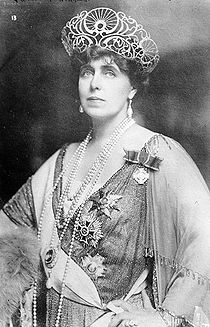
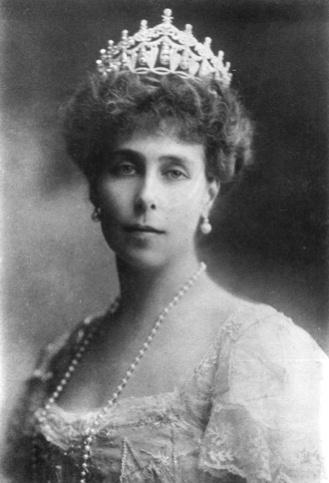
2d) Marie Alexandra Victoria (Eastwell Park
29 Oct 1875-Sinaia 10 Jul 1938); m.Sigmaringen
10 Jan 1893 King Ferdinand of Romania (Sigmaringen 24 Aug 1865-Sinaia
20 Jul 1927)
3d) Victoria Melita (Malta 25 Nov 1876-Amorbach
2 Mar 1936); m.1st Coburg 19 Apr 1894
(div 1901) Ernst Ludwig, Grand Duke of Hesse and the Rhine (Darmstadt 25 Nov 1868-Schloß
Wolfsgarten 9 Oct 1937);
m.2d Tegernsee 8 Oct 1905 Kirill, Grand Duke
of Russia (Tsarskoie Selo 12 Oct 1876-Neuilly-sur-Seine 13 Oct 1938)
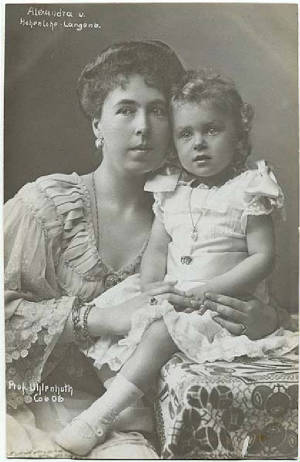
4d) Alexandra Louise Olga Victoria (Coburg 1 Sep 1878-Schwäbisch-Hall
16
Apr 1942); m.Coburg 20 Apr 1896 Ernst Fst zu Hohenlohe-Langenburg
(Langenburg 13 Sep 1863-Langenburg 11 Dec 1950)
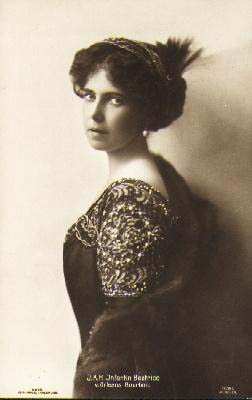
5d) Beatrice Leopoldine Victoria (Eastwell Park
20 Apr 1884-Sanlucar de Barrameda
13 Jul 1966); m.Coburg 15 Jul 1909 Alfonso, Infant of Spain, Duque de Galliera
(Madrid 12 Nov 1886-Sanlucar
de Barrameda 10 Aug 1975)
2c) Leopold, Duke of Albany, 7 April 1853 - 28 March 1884;
m.Helene Pss
zu Waldeck u.Pyrmont (1861-1922); for more details see Great Britain.
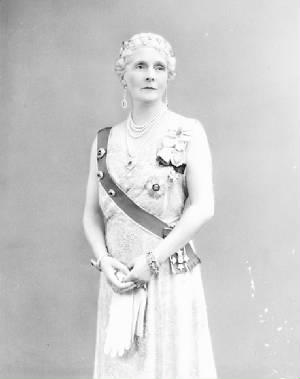
1d) Princess Alice, Countess of Athlone (Alice Mary Victoria
Augusta
Pauline; née Princess Alice of Albany; 25 February 1883 - 3 January 1981)
m. 10 February 1904, at St
George's Chapel, Windsor, her second cousin
once-removed, Prince Alexander of Teck (Earl of Athlone): 14 April
1874 - 16 January 1957.