Nobility of the World
Volume VIII - China
Chinese sovereignty and peerage, the nobility of China,
were an important feature of traditional social and political organization of Imperial China. While the concepts of hereditary
sovereign and peerage titles and noble families were featured as early as the semi-mythical, early historical period, a settled
system of nobility was established from the Zhou Dynasty. In the subsequent millennia, this system was largely maintained
in form, with some changes and additions, although the content constantly evolved.
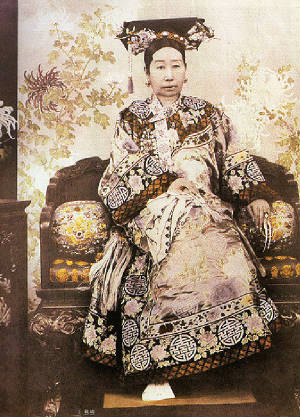
The last, well-developed system of noble titles was established
under the Qing Dynasty. The CE 1911 republican Xinhai Revolution saw the dissolution of the nobility along with the totality
of the official imperial system. Though some noble families maintained their titles and dignity for a time, new political
and economic circumstances forced their decline. The fact that most existing nobles were of the Manchu ethnicity, a ruling
elite under the Qing Dynasty, but an ethnic minority like any other under the new Republic, resulted in minimal popular recognition
of their nobility. Today, the nobility as a class is almost entirely dissipated in China, and only a very few maintain any
pretense or claim to noble titles, which are almost universally unrecognized.
Elevation
and degradation of rank might occur posthumously, and posthumous elevation was sometimes an aspiration; Guan Yu, was styled,
during his lifetime, Marquis of Han Shou (漢壽亭侯) in the Han Dynasty then posthumously in the later
Song Dynasty elevated to Duke Zhonghui (忠惠公) then in the Yuan Dynasty Prince of Xianling Yiyong Wu'an
Yingji (顯靈義勇武安英濟王) then in the Ming Dynasty both beatified
and royalized as Saintly Emperor Guan the Great God Who Subdues Demons of the Three Worlds and Whose Awe Spreads Far and Moves
Heaven (三界伏魔大神威遠震天尊關聖帝君)
and in popular culture deified as a God of Prosperity, Commerce, War, and Police.The apex of the nobility is the sovereign.
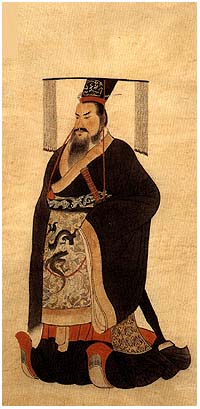
Sovereign
and Ruling Family Ranks of China
The title of the sovereign has changed over time, together with the connotations of the
respective titles. In Chinese history are generally 3 levels of supreme and fully independent sovereignty or high, significantly
autonomous sovereignty above the next lower category of ranks, the aristocracy who usually recognized the overlordship of
a higher sovereign or ruled a semi-independent, tributary, or independent realm of self-recognized insufficient importance
in size, power, or influence to claim a sovereign title, such as a Duchy which in Western terms would be called a Duchy, Principality,
or some level of Chiefdom. The broadest sovereign is what gets translated
as the single term emperor in English. An emperor might appoint or confirm or tolerate subsovereigns or tributary rulers styled
kings.
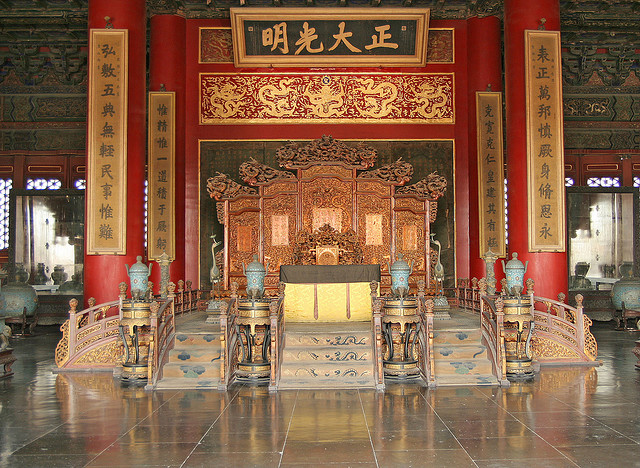
As a title
of nobility, Ba Wang, hegemon, recognized overlordship of several subordinate kings while refraining from claiming the title
of emperor within the imperium of the Chinese subcontinent, such as its borders were considered from era to era. Sovereigns
holding the title of king of an individual state within and without the shifting borders of the Chinese imperium might be
fully independent heads of foreign nations, such as the King of Korea who might, in some cases, be subordinate to foreign
emperors just as territorial or tribal sovereign Mongol khans might be subject to one of several Khagans or Great khans. Confusingly,
some Chinese emperors styled many or all close male relatives of certain kinds such as brothers, uncles, or nephews as wang,
a term for king, using it as a courtesy title. However, Chinese histories since ancient works such as Shiji were also fairly
liberal in terming local tribal chiefs as "king" of a particular territory ranging from vast to tiny, using convenient
terms of the form "(locality)" + "(king)" such as Changshawang, "King of Changsha" which was
briefly recognized as a kingdom but was usually a smaller part of Chu state or just a county of the Sui Dynasty state, or
phrases such as Yiwang, "Yi (Eastern) Foreign ('barbarian') king(s)," while in other cases or by other authors other
terms such as [tusi], "native chief" might be used for the same office. The downward extensibility of terms for
"king" in more casual usage also influences other allusive uses of these terms. In modern colloquial Chinese the
term "king" is sometimes also used, roughly as loosely as in English, for such non-literal terms as mien da wang,
"great king of noodles" for a pasta-lover, where an English-speaker might use such terms as [King of the Road].
Family members of individual
sovereigns were also born to titles or granted specific titles by the sovereign, largely according to family tree proximity,
including blood relatives and in-laws and adoptees of predecessors and older generations of the sovereign. Frequently, the
parents of a new dynasty-founding sovereign would become elevated with sovereign or ruling family ranks, even if this was
already a posthumous act at the time of the dynasty-founding sovereign's accession.
Titles translated in English as "prince"
and "princess" were generally immediate or recent descendants of sovereigns, with increasing distance at birth from
an ancestral sovereign in succeeding generations resulting in degradations of the particular grade of prince or princess and
finally degradation of posterity's ranks as a whole below that of prince and princess. Sovereigns of smaller states are typically
styled with lesser titles of aristocracy such as Duke of a Duchy or Marquis rather than as hereditary sovereign Princes who
do not ascend to kingship as in the European case of the Principality of Monaco, and dynasties which gained or lost significant
territory might change the titles of successive rulers from sovereign to aristocratic titles or vice versa, either by self-designation
of the ruler or through imposed entitlement from a conquering state. For example, when Shu (state)'s kings were conquered
by Qin (state), its Kaiming rulers became Marquises such as Marquis Hui of Shu who attempted a rebellion against Qin overlords
in BCE 301.
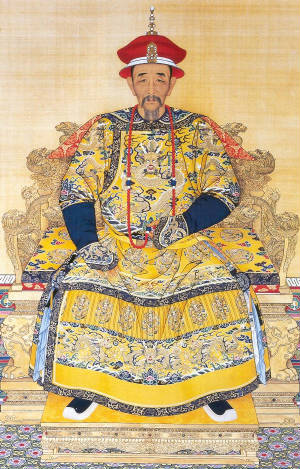
Imperium
- Emperor and Ennobled Family
Although formally Tianzi,
"The Son of Heaven," the power of the Chinese emperor varied between different emperors and different dynasties,
with some emperors being absolute rulers and others being figureheads with actual power in the hands of court factions, eunuchs,
the bureaucracy or noble families.
In the earliest, semi-mythical age, the sovereign was titled either huang (Chinese: 皇
huáng) or di (Chinese: 帝 dì). Together, these rulers were called the Three Sovereigns and Five Emperors.
For the lists of the earliest, mythological rulers, both titles are conventionally translated in English as "Sovereigns"
though individual rulers entitled either huang or di from this period are translated in English with the title "Emperor"
as these early mythological histories aim to feature the sovereigns of the evolving polity of the Chinese state, tracking
those states which can best be claimed in a roughly continuous chain of imperial primacy interspersed with several periods
of disunity such as the Spring and Autumn Period, the Warring States Period, the Three Kingdoms Period, the Five Dynasties
and Ten Kingdoms Period, the republican Chinese Civil War and so on.
The sovereigns during the Xia Dynasty and Shang Dynasty called
themselves Di (Chinese: 帝 dì); rulers of these dynasties are conventionally translated with the title "king"
and sometimes "emperor" in English even though the same term used in the mythologically previous dynasties is conventionally
translated with the title "emperor" in English.
The sovereign during the Zhou Dynasty called themselves Wang
(Chinese: 王 or 國王; wáng), before the Qin Dynasty innovated the new term huangdi which would become
the new standard term for "emperor." The title "Wang" should not be confused with the common surname,
which, at least by middle and later Chinese historical usage, has no definite royal implications. Rulers of these dynasties
are conventionally translated with the title "king" and sometimes "emperor" in English.
Emperor or Huangdi (皇帝,
pinyin: huáng dì) was the title of the Chinese head of state of China from the Qin Dynasty in 221 BC until the
fall of the Qing Dynasty in 1911. The first emperor of Qin (Qin Shi Huang) combined the two characters huang (皇 "august,
magnificent") and di (帝 "God, Royal Ancestor") from the mythological tradition and the Xia and Shang
dynasties to form the new, grander title "Huangdi". Since the Han dynasty, Huangdi began to be abbreviated to huang
or di.
The title of emperor was usually transmitted from father to son. Most often, the first-born son of the empress inherited
the office, failing which the post was taken up by the first-born son of a concubine or consort of lower rank, but this rule
was not universal and disputed succession was the cause of a number of civil wars. Unlike the case of the Japan, the emperor's
regime in traditional Chinese political theory allowed for a change in dynasty, and an emperor could be replaced by a rebel
leader. This was because a successful rebel leader was believed to enjoy the Mandate of Heaven, while the deposed or defeated
emperor had lost favour with the gods, and his mandate was over, a fact made apparent to all by his defeat.
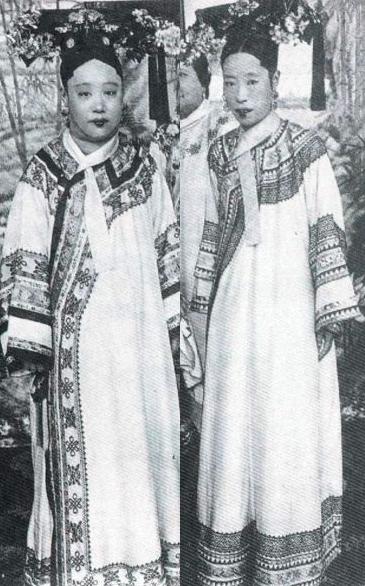
Empress,
Consort, Concubine and Imperial Spouses
It was generally not accepted for a female to succeed to the throne as a sovereign regnant
in her own right, rather than playing the role of a sovereign's consort or regent for a sovereign who was still a minor in
age, so that in history of China there has only been one reigning empress, the Empress Wu, whose reign punctuated the Tang
Dynasty. However, there have been numerous cases in Chinese history where a woman was the actual power behind the imperial
throne (see éminence grise).
Hou, Empress, actually Empress Consort in English terms, was a title granted to an official primary spouse of the polygamous male Chinese Emperor,
and for the mother of the Emperor, typically elevated to this rank of Empress Dowager, bearing a senior title such as
Tai Hou, Grand Empress, regardless of which spousal ranking she bore prior to the emperor's accession. In practice, many Chinese
Empress Dowagers, either as official regent for a sovereign who was still a minor in age or from the influence of position
within family social ranks, wielded great power or is historically considered to have been the effective wielder of supreme
power in China, as in the case of Empress Dowager Cixi, Regent of China considered de facto sovereign of China for 47
years during CE 1861-1908.
Imperial Madams, ranking below Empress, aren't often distinguished in English from
imperial Concubines, the next lower rank, but these were also titles of significance within the imperial household, and
Imperial Madams might be translated as Consorts with the intention of distinguishing them from Empresses though
all Empresses except the sole case of one Empress Regnant in Chinese history are technically Empress Consorts in English terms,
primacy spouses of the Emperor Regnant who is actually invested with governmental rule.
Zhou li, the Rites of Zhou, states that Emperors
are entitled to the following simultaneous spouses:
- 1 Empress (皇后)
- 3 Madames or Consorts (夫人)
- 9 Imperial Concubines (嬪)
- 27 Shifus (世婦)
- 81 Imperial Wives (御妻)
Hegemony
- hegemons and ennobled family
Sovereigns styled Ba Wang, hegemon, asserted official overlordship of several subordinate
kings while refraining from claiming the title of emperor within the imperium of the Chinese subcontinent, such as its borders
were considered from era to era, as in the case of Xiang Yu who styled himself Xīchǔ Bàwáng, Western
Chu Hegemon, appointing subordinate generals from his campaigns of conquest, including defeated ones, as Wang, kings of states
within his hegemony.
Royalty - kings and ennobled family
As noted above in the section discussing Emperors,
the sovereigns during the Xia Dynasty and Shang Dynasty who called themselves Di (Chinese: 帝 dì)and during the
Zhou Dynasty who called themselves Wang (Chinese: 王 or 國王; wáng), was the title of the Chinese
head of state until the Qin Dynasty. The title "Wang" should not be confused with the common surname, which, at
least by middle and later Chinese historical usage, has no definite royal implications. Rulers of these dynasties are conventionally
translated with the title "king" and sometimes "emperor" in English.
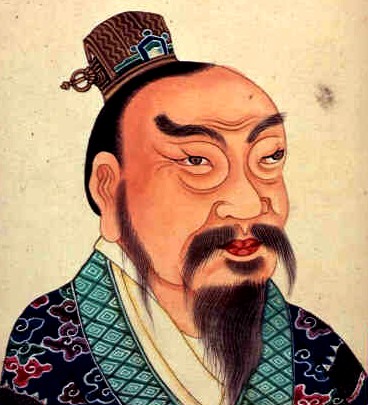
Qin and Han dynasty
Prior to the Qin dynasty, Wang (sovereign)
was the title for the ruler of whole China. Under him were the vassals or Zhuhou ( 诸侯/諸侯
), who held territories granted by a succession of Zhou Dynasty kings. They had the duty to support the Zhou king
during an emergency and were ranked according to the Five Orders of Nobility. In the Spring and Autumn Period, the
Zhou kings had lost most of their powers, and the most powerful vassals became the de facto ruler of China. Finally,
in the Warring States Period, most vassals declared themselves Wang or kings, and regarded themselves
as equal to the Zhou king. After Zheng, king of the state of Qin, later known as Qin Shi Huang, defeated all the other
vassals and unified China, he adopted the new title of Huangdi (emperor). Qin Shi Huang eliminated noble
titles, as he sponsored legalism which believed in merit, not birth. He forced all nobles to the capital, seized
their lands and turned them into administrative districts with the officials ruling them selected on merit. After the demise
of Qin Er Shi, the last Qin ruler to used the title Huangdi (his successor Ziying used the
title King of Qin rather than Emperor), Xiang Yu styled himself Hegemon King of Western Chu (Xichu Bàwáng
西楚霸王) rather than Emperor. Xiang Yu gave King Huai of Chu II the title of Emperor
of Chu (楚義帝) or The Righteous Emperor of Southern Chu (南楚義帝)
and awarded the rest of his allies, including Liu Bang, titles and a place to administer. Xiang Yu gave Liu Bang the
Principality of Han, and he would soon replace him as the ruler of China.
The founder of the Han Dynasty, Liu Bang,
continued to use the title Huangdi. In order to appease his wartime allies, he gave each of them a piece of
land as their own "kingdom" (Wangguo) along with a title of Wang. He eventually killed all of them
and replaced them with members of his family. These kingdoms remained effectively independent until the Rebellion of
the Seven States. Since then, Wang became merely the highest hereditary title, which roughly corresponded
to the title of prince, and, as such, was commonly given to relatives of the emperor. The title Gong also
reverted purely to a peerage title, ranking belowWang. Those who bore such titles were entirely under the
auspices of the emperor, and had no ruling power of their own. The two characters combined to form the rank, Wanggong,
grew to become synonymous with all higher court officials.
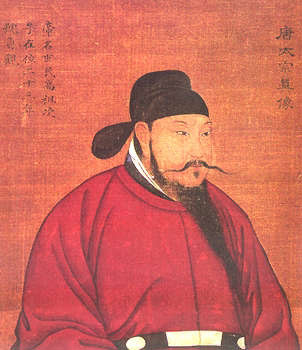
Tang
Dynasty and after
During the Tang Dynasty, nobles lost most of their power to the mandarins when imperial
examination replaced the nine-rank system. Subsequent
dynasties expanded the hereditary titles further. Not all titles of peerage are hereditary, and the right to continue the
heredity passage of a very high title was seen as a very high honour; at the end of the Qing Dynasty, there were five
grades of princes, amongst a myriad of other titles. For details, see Qing Dynasty nobility.
A few Chinese families enjoyed
hereditary titles in the full sense, the chief among them being the Holy Duke of Yen (the descendant of Confucius);
others, such as the lineal descendants of Wen Tianxiang, ennobled the Duke of Xingguo, not choosing to use their hereditary
title. The Imperial Clansmen consisted of those who trace their descent direct from the founder of the Qing Dynasty,
and were distinguished by the privilege of wearing a yellow girdle; collateral relatives of the imperial house wore a red
girdle. Twelve degrees of nobility (in a descending scale as one generation succeeds another) were conferred on the descendants
of every emperor; in the thirteenth generation the descendants of emperors were merged in the general population, save that
they retain the yellow girdle. The heads of eight houses, the Iron-capped (or helmeted) princes, maintained their titles in
perpetuity by rule of primogeniture in virtue of having helped the Manchu conquest of China.
All titles of nobility were
officially abolished when China became a republic in 1912. They were briefly revived under Yuan Shikai's empire and
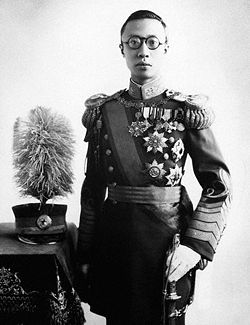
after Zhang Xun's coup. The last emperor was allowed to keep his title but was treated as a foreign monarch
until the 1924 coup. Manchukuo also had titles of nobility.
List of
people granted Peerage
by Yuan Shikai as self-proclaimed emperor - 1915-1916
After the fall of the Qing Dynasty and its "Last
Emperor" of China, personal name Puyi after the CE 1911 republican Xinhai Revolution, Chinese President Yuan
Shikai attempted to resurrect the imperial system, proclaiming himself emperor in his briefEmpire of China (1915-1916) which
did not last enough months to conduct its scheduled and unpopular ceremony of accession date before he repealed it himself
and was deposed as President and Emperor-in-Waiting. During this period, Yuan Shikai as sovereign declared the ennoblement
of several people, in this case not so much his family and clan as allies and those he sought to woo as supporters for the
new Empire, though some declined his proferred honors.
Prince of the First Rank Wuyi - 武義親王 Wǔyì
qīn wáng
Dukes
of the First Rank - 一等公 Yī děng gōng
- Long Jiguang (龍濟光)
- Zhang Xun
- Feng Guozhang
- Jiang Guiti (姜桂題)
- Duan Zhigui
- Ni Sichong
- Liu
Guanxiong
Marquesses
of the First Rank - 一等侯 Yī děng hóu
- Tang Xiangming (湯薌銘)
- Li Chun (李純)
- Zhu Rui (朱瑞)
- Lu Rongting
- Zhao Ti (趙倜)
- Chen Yi
- Tang
Jiyao
- Yan Xishan
- Wang Zhanyuan (王占元)
- Lui Kang
Counts of the First Rank - 一等伯 Yī
děng bó
- Zhang
Xiluan (張錫鑾)
- Zhu Jiabao (朱家寶)
- Zhang Mingqi (張鳴岐)
- Tian Wenlie (田文烈)
- Jin Yunpeng
- Yang Zengxin (楊增新)
- Lu Jianzhang (陸建章)
- Meng Enyuan (孟恩遠)
- Qu Yinguang (屈映光)
- Qi Yaolin (齊耀琳)
- Cao Kun
- Yang Shande (楊善德)
Viscounts of the First Rank - 一等子 Yī
děng zǐ
- Zhu Qinglan (朱慶瀾)
- Zhang Guangjian (張廣建)
- Li Houji (李厚基)
- Liu Xianshi (劉顯世)
Barons of the First Rank - 一等男 Yī
děng nán
- Ma
Anliang (馬安良)
- Xu Shiying (許世英)
- Qi Yang (戚揚)
- Ren Kecheng (任可澄)
- Wang Yitang (王揖唐)
- He Zonglian (何宗蓮)
- Zhang Huaizhi (張懷芝)
- Long Jinuang (龍覲光)
- Chen Bingkun
- Lu Yongxiang (盧永祥)
- Lü Diaoyuan (呂調元)
- Jin Yong (金永)
- Cai Rukai (蔡儒楷)
- Duan Shuyun (段書雲)
- Long Jianzhang (龍建章)
- Shen Jinjian (沈金鑑)
- Pan Juying (潘矩楹)
Baron of the Third Rank - 三等男 Sān
děng nán
Modern
Chinese styles for foreign monarchs
Traditional
Chinese political theory held that "All lands under Heaven belong to the emperor, all people under Heaven belong, are
subjects of the emperor." (普天之下,莫非王土;率土之濱,莫非王臣).
Thus, a foreign monarch would also be referred to asWang, implying that one was inferior in rank and thus subject
to the Chinese Emperor.
In modern Chinese, a king is referred to as a Wang, while an emperor would be referred to
as Huangdi. The king in those times were referred to as the mandate of heaven. Therefore Victoria of the
United Kingdom was styled Nü-Wang (Queen) of the United Kingdom of Great Britain and Ireland,
and Nü-Huang (Empress) of India.
Aristocracy: Zhou Dynasty - BCE 1046-256
The Zhou Dynasty of
the Zhou state of Northern China not only preceded the full unification of early China under the Qin Dynasty, the first empire
whose realm would subsequently be considered to extend broadly enough to be national in the context of the territorial concept
of China, the Zhouli, Rites of Zhou were subsequently canonized by Confucius among his Confucian Chinese classics as a model
precedent in principles of government, so ranks of nobility in later regimes both in periods of unified sovereignty and of
competing smaller states would typically draw from its catalog of peerage. From Zhouli, later Confucian political philosophy
and government publications, and from the surrounding historical literature of particular individuals, localities and events,
the following social classifications have been attested.
Honors and awards, and clan law, of the Zhou Dynasty
The social system of the
Zhou Dynasty is sometimes referred to as the Chinese proto-feudalism and was the combination of Fengjian (honors and awards)
and Zongfa (clan law). Male subjects were classified into, in descending order of rank:
the nobles - Zhuhou (諸侯 pinyin zhū hóu),
the gentlemen ministers (of the royal court) - Qing (卿 qīng),
the gentlemen bureaucrats - Daifu (大夫
dà fū)
the yeomen - Shi (士 shì)
the commoners - Shumin (庶民 shù mín).
Zongfa
(宗法, clan law), which applied to all social classes, governed the primogeniture of rank and succession of other
siblings. The eldest son of the consort would inherit the title and retained the same rank within the system. Other sons from
the consort, concubines and mistresses would be given titles one rank lower than their father.
As time went by, all terms
had lost their original meanings nonetheless. Qing (卿), Daifu (大夫) and Shi (士) became synonyms
of court officials. Physicians were often called Daifu during the Late Imperial China. Referring to a male or self-reference
of a male as Gongzi eventually became a way to raise one's mianzi (refer to Face (social concept)), and would indeed be considered
flattery today.
Peer Ranks of the Zhou Dynasty
Under the Zhou Dynasty were Wǔděngjuéwèi (五等爵位),
five (aristocratic) peerage ranks (abbreviated Wǔjué) below the royal ranks in the following
descending order from higher to lower rank:
Male Aristocracy of China
Duke, gong 公, which especially featured sovereign family members, though after changes
of lines within an imperial or royal House or between dynasties, or through internal adoptions or coups, a Duchy's current
rulers might have been severed from current imperial or royal sovereigns and have become a distinct lineage of their own;
high dukes might be styled, though not explicit "royal dukes" as in the English peerage. A Chinese royal duke might
be a clan prince or (courtesy title) family "king" under the emperor while simultaneously holding a Duchy, whether
enfoeffed with land or without portfolio. A character whose fundamental meaning is "public", gong is also used in
titles, ordinary names, and honorific names including deified stylings in ways other than indicating the peerage rank of duke.
Marquis, hou 侯,
usually with the same emphasis on being a national borderland Mark lord as in the European marquis title
"count" bo 伯
"viscount" zi 子, which is also extensively
used in Chinese nicknames as the meaning of the character is "child," as well as in courtesy names and honorific
names in which context the character came to mean "master" as in Kongfuzi or Kongzi, Confucius, Master of surname
Kung, or the Daoist patriarch Laozi, Old Master
"baron" nan 男, which is also used outside of its use as a peerage term to indicate male
gender in individual names and in classifications such as "men", as the character's fundamental meaning is "male".
Duke Zhonghui"
(忠惠公)
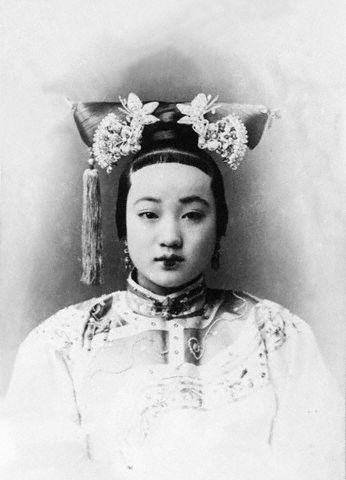
Female
Aristocracy of China
Titles
of female members of the aristocracies varied in different dynasties and eras, each having unique classifications for the
spouses of the emperor. Any female member excluding a spouse of an emperor can be called a princess or gongzhu (公主
gōng zhǔ), and incorporated her associated place into her title if she had one.
Other Historical Chinese Titles
Other titles might be tailored
down to a single individual being officially honored for a particular achievement, with or without executive portfolio following
the granting of the title, and might truly be titles outside the executive government structure, even when words used in their
phrasing would otherwise imply executive office.
Protector General - 都護; Duhu
On the other hand, victorious generals were
often granted official praise-names or names implying particular old and new duties or some combination of these, which would
be quasi-executive or fully executive titles honored as much like peerage as like actual military rank, as in the case of
Liu Bei promoting Guan Yu to a rank phrased as General Who Exterminates Rebels (蕩寇將軍) during the
active course of Guan Yu's military career.

Please See: Princely House of Borjikin - Borjigin
His Highness Prince Steven Jorchen Harold
Borjigin is the 36th generation of the Great Khan Dynasty. His Highness is a direct descendant
to the Great Genghis Khan, the 13th-century warrior in central Asia who founded the Mongol Empire, one of the
largest Empires in history.